Blog
Aug. 20, 2026
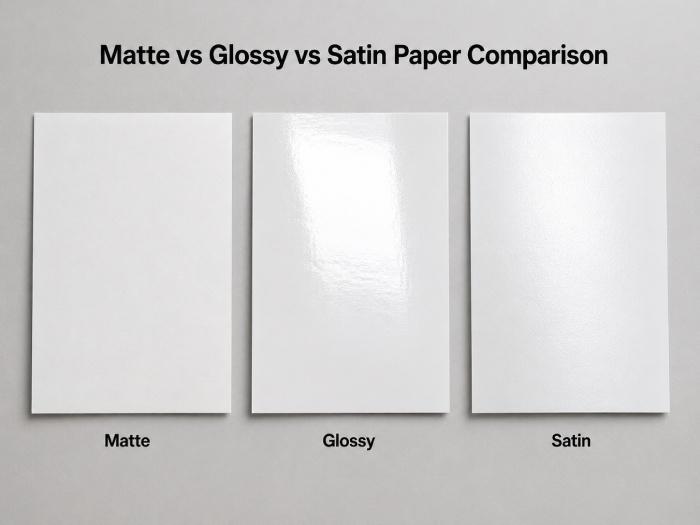
Choosing between matte, glossy and satin paper is not only about which one looks better. The surface changes how much light the paper reflects, how photos and colors appear, and how comfortable the page is to read.
A text-heavy book and a photo-heavy catalog often need different paper. Satin gives you a middle option when both images and text are important.
Matte paper has a smooth surface with very little shine. It reflects less light, so there is less glare when you read under strong lighting.
Colors usually look a little softer than they do on glossy paper, and the overall surface feels more understated.
Matte is commonly used for novels, journals, workbooks, manuals, brochures and catalogs with a lot of text.
For custom book printing, matte paper is often used when the inside pages need to stay comfortable to read without strong surface reflection.

Glossy paper has a smooth, reflective surface. That extra reflection can make photos look brighter and colors appear more vivid.
Glossy paper is often used for photo books, image-heavy catalogs, brochures and promotional print.
It makes more sense when photos carry most of the page and strong color is part of the visual effect.
For brochures, finish also needs to match the paper weight and fold structure. Our guide to choosing brochure paper looks at those factors in more detail.

Satin has more sheen than matte but less reflection than full gloss.
Photos keep more depth than they usually do on matte paper, while the page still feels less shiny than gloss. That makes satin useful when text and photography share the same page.
You may also come across the term silk paper when looking at coated paper stocks.
Satin and silk can look very similar, but paper mills do not always use the two names in exactly the same way.
Two papers with similar finish names may still have a different sheen or surface feel. When appearance is important, compare the actual paper stock rather than the name alone.
| Feature | Matte | Satin | Glossy |
|---|---|---|---|
| Shine | Low | Medium | High |
| Color appearance | Softer | Balanced | More vivid |
| Reflection | Low | Moderate | High |
| Long reading | Better | Good | Less suitable |
| Photos | Good | Very good | Strongest visual effect |
| Fingerprints | Less noticeable | Moderate | More noticeable |
| Common use | Text-heavy print | Mixed text and images | Image-heavy print |
Gloss can be measured, not just described as “shiny” or “not shiny.”
For many paper and board gloss tests, 75° measurement geometry is used. ISO 8254-1 and TAPPI T 480 both describe 75° methods for measuring paper gloss.
But there is no universal number that automatically makes every paper matte, satin or glossy. Paper grade, coating and manufacturer can all change the measured result.
That is one reason two stocks both sold as “satin” may not look exactly the same.This is easy to mix up: matte paper and matte lamination are two different things.
Matte, satin and glossy can describe the surface of the paper itself. Matte lamination and gloss lamination are films added after printing. Spot UV and varnish are separate finishing processes.
For example, the inside pages of a book can use satin coated paper while the cover uses matte lamination with spot UV.
GSM is separate as well. A heavier sheet is not automatically glossier, more matte or better quality. If paper weight is also part of your decision, our paper weight guide explains how GSM changes the feel and use of printed paper.
A dull finish has a low level of shine and can look close to matte, although the exact surface depends on the paper or coating.
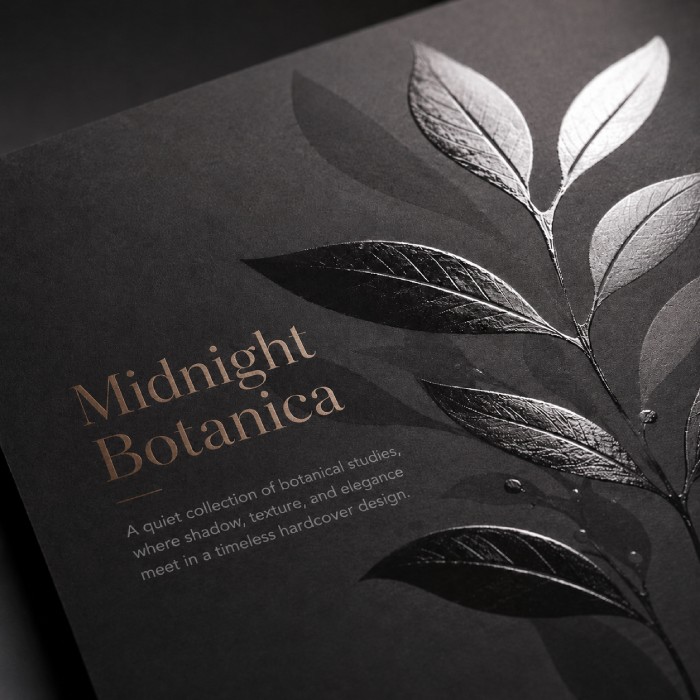
Spot gloss adds shine only where you want it, such as on a title, logo or graphic.
The effect is easier to see against a matte or dull surface because there is more contrast between the two areas.
The same contrast can be used on custom printed gift boxes, where selected artwork can receive spot UV over a matte or dull surface.
“Matte,” “satin” and “glossy” are useful starting points, but they do not tell you exactly how every paper will look.
Two satin stocks from different mills, for example, can have noticeably different levels of sheen.
The same paper can look different depending on what you print on it.
Dark colors, large solid areas and heavy photo coverage can make surface reflection easier to notice. A blank paper sample does not always show exactly how the finished printed page will look.
Think about the lighting and how the finished product will be handled.
A book read for long periods and a product catalog viewed under bright showroom lights do not have the same needs. The surface that looks good in one situation may be distracting in another.
The paper name is only a starting point. Paper grade, GSM, ink coverage and artwork all affect the final appearance.
This becomes more noticeable with dark backgrounds or large printed areas, where surface reflection can change how the color looks from different angles.
If the surface is important to the project, check the actual paper or make a printed sample before bulk production. That gives you a much clearer idea of the final result than the finish name alone.
Matte reflects less light and gives print a softer appearance. Glossy has more shine and usually makes photos and colors look stronger.
Satin sits between the two. It has more sheen than matte but less reflection than full gloss.
They can be very similar, but different paper manufacturers may use the names differently. The actual paper stock is more useful for comparison than the name.
Common examples include matte covers with glossy titles or dull boxes with shiny logos.
No. Matte paper refers to the paper surface, while matte lamination is a film applied after printing.
Yes. Surface finish and paper weight are separate specifications, so matte, satin and glossy stocks can each be available in different grammages.
Yes. If the surface or printed color is important, checking the paper or a printed sample before production is the safest way to confirm it.
For a text-led book, start with matte. For pages that mix text and photography, satin gives you more image depth without full gloss. For image-led print, glossy usually gives the strongest color and shine.
For covers and packaging, the paper surface can also be combined with lamination, spot gloss or spot UV when selected areas need more contrast.
If you are comparing paper for a custom project, contact us with your product type, artwork and printing requirements. We can help you check suitable paper and finishing options before production.


